
 Brands
 Best Selling
 Offer
Offer Combo
ComboStarting a skincare routine can feel overwhelming. With thousands of products lining the shelves and endless advice floating around social media, figuring out where to begin is often confusing. You might find yourself asking: Which products do I actually need? Does order matter? How do I avoid breaking out?
Here is the good news: building an effective skincare routine does not require a dozen steps or a shelf full of expensive potion bottles. In fact, when it comes to long-term skin health, simplicity almost always wins.
Whether you are looking to tackle specific skin concerns, manage unexpected breakouts, or simply keep your skin hydrated and glowing, this comprehensive guide breaks down everything you need to know about creating a beginner-friendly, evidence-based routine that actually works.
Why a Daily Skincare Routine Matters
Your skin is the body’s largest organ, acting as a protective barrier against environmental aggressors, pollution, ultraviolet (UV) radiation, and harmful bacteria. Every single day, your skin sheds dead cells, produces natural oils (sebum), and absorbs environmental impurities.
Without a consistent skincare routine, these impurities accumulate, leading to clogged pores, premature ageing, dehydration, and dullness.
                                  DAILY SKINCARE
                                         │
                 ┌───────────────────────┴───────────────────────┐
                 ▼                                               ▼
         Morning Routine                                  Evening Routine
  (Protect, Hydrate, Shield)                     (Cleanse, Repair, Nourish)
                 │                                               │
  ┌──────────────┼──────────────┐                 ┌──────────────┼──────────────┐
  ▼              ▼              ▼                 ▼              ▼              ▼
Cleanser     Moisturiser    Sunscreen          Cleanser     Active/Serum   Moisturiser
A daily care strategy supports your skin in three crucial ways:
- Reinforces the Moisture Barrier: A healthy skin barrier keeps hydration locked in and irritants out. Consistent moisturisation and gentle cleansing preserve this essential shield.
- Prevents Premature Ageing: According to the American Academy of Dermatology (AAD), sun exposure is responsible for up to 80% of visible facial ageing. Daily sunscreen application prevents fine lines, dark spots, and loss of elasticity.
- Targets Specific Concerns: Whether you deal with acne, hyperpigmentation, or sensitivity, applying targeted skincare products regularly yields visible, long-term improvements over time.
Think of your daily care as an investment in preventative health rather than a quick cosmetic fix.
Step 1: Discover Your Skin Type
Before purchasing a single cleanser or cream, you must determine your skin type. Using products formulated for the wrong skin type can cause irritation, trigger breakouts, or leave your skin feeling stripped and uncomfortable.
Dermatologists generally classify skin into five primary categories:
                          ┌──────────────────────────┐
                          │    WHAT IS YOUR SKIN?    │
                          └────────────┬─────────────┘
                                       │
         ┌──────────────────┬──────────┴───────┬──────────────────┐
         ▼                  ▼                  ▼                  ▼
     [ Oily ]           [ Dry ]          [ Combination ]    [ Sensitive ]
   Shiny all over,     Flaky, tight,      Shiny T-zone,      Red, reactive,
   enlarged pores     rough texture       dry/normal cheeks  stings easily
1. Oily Skin
- Characteristics: Produces excess sebum throughout the day, particularly in the T-zone (forehead, nose, and chin). Pores often appear enlarged, and skin is prone to blackheads and blemishes.
- How it feels: Slick or shiny within a few hours after washing.
2. Dry Skin
- Characteristics: Lacks natural lipids and moisture. May appear dull, rough, or flaky.
- How it feels: Tight, itchy, or uncomfortable, especially after cleansing.
3. Combination Skin
- Characteristics: Features both oily and dry areas. Typically, the T-zone is oily or acne-prone, while the cheeks and outer jawline remain normal or dry.
- How it feels: Varying texture across different zones of the face.
4. Sensitive Skin
- Characteristics: Easily irritated by weather changes, strong ingredients, or fragrance. Prone to redness, burning, and inflammation.
- How it feels: Stings or burns when applying certain products.
5. Normal Skin
- Characteristics: Well-balanced moisture levels—neither overly oily nor excessively dry. Rarely experiences severe breakouts or sensitivity.
- How it feels: Comfortable and elastic without special handling.
The Bare-Face Test: How to Test Your Skin Type at Home
- Wash your face with a mild, gentle cleanser.
- Gently pat your skin dry with a clean towel.
- Do not apply any skincare products, serums, or moisturisers.
- Wait 60 minutes.
- Observe your skin in a mirror:
- If your face looks shiny and feels slick all over $\rightarrow$ Oily skin.
- If your face feels tight, itchy, or shows flaking $\rightarrow$ Dry skin.
- If your T-zone shines while your cheeks feel tight $\rightarrow$ Combination skin.
- If your skin shows redness or mild discomfort $\rightarrow$ Sensitive skin.
- If your skin feels balanced and comfortable $\rightarrow$ Normal skin.
The Essential Skincare Steps for Beginners
You do not need a complex 10-step routine to achieve healthy skin. A basic beginner skincare routine rests on three non-negotiable fundamentals: Cleansing, Moisturising, and Sun Protection.
Once you master these basics, you can add optional steps like toners and serums to address specific skin goals.
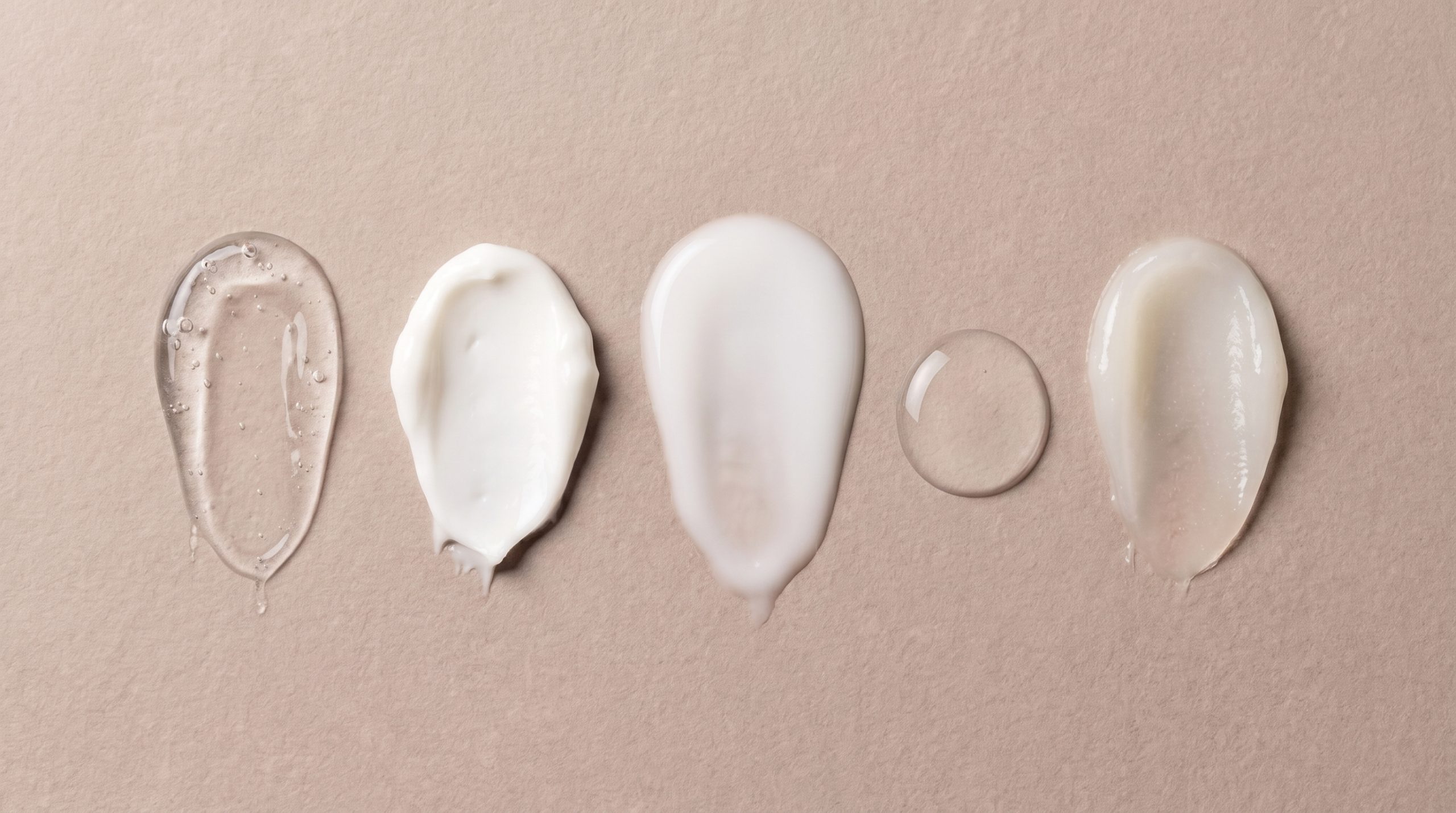
| Step | Product | Purpose | Frequency |
| 1. Cleanse | Facial Cleanser | Removes dirt, excess oil, pollution, and makeup | Morning & Evening |
| 2. Tone (Optional) | Balancing Toner | Restores pH, hydrates, or provides mild exfoliation | Morning & Evening |
| 3. Treat (Optional) | Serum | Delivers concentrated active ingredients for targeted concerns | Morning or Evening |
| 4. Hydrate | Moisturiser | Locks in water, smooths texture, and seals the skin barrier | Morning & Evening |
| 5. Protect | Broad-Spectrum Sunscreen | Shields skin against harmful UVA and UVB rays | Morning only |
Step 1: Cleanser (Morning & Night)
Cleansing is the foundation of every effective routine. A good cleanser removes sweat, excess sebum, dead skin cells, environmental pollutants, and leftover cosmetics without stripping your skin’s natural moisture barrier.
- For Oily / Acne-Prone Skin: Choose foaming, gel-based, or salicylic acid-based cleansers that remove surface oil without leaving skin raw.
- For Dry / Sensitive Skin: Opt for creamy, non-foaming, or lotion cleansers enriched with hydrating ingredients like glycerin or ceramides.
- How to apply: Wet your face with lukewarm water (avoid hot water, which strips natural oils). Massage a small amount of cleanser in gentle circular motions for 45–60 seconds. Rinse thoroughly and pat dry with a soft, clean towel.
Step 2: Toner (Optional — Morning & Night)
Historically, toners were astringent, alcohol-heavy liquids used to strip remaining oils. Modern toners are completely different: they are hydrating, nutrient-dense fluids designed to rebalance your skin’s pH balance after cleansing.
- Hydrating Toners: Packed with hyaluronic acid, aloe vera, or rosewater to prep dry skin for better product absorption.
- Exfoliating Toners: Formulated with Alpha Hydroxy Acids (AHAs) or Beta Hydroxy Acids (BHAs) to clear dead skin and smooth texture.
- How to apply: Splash a few drops directly into clean hands and press gently into your face, or apply using a soft cotton pad.
Step 3: Serum (Optional — Morning or Night)
Serums are lightweight, fast-absorbing treatments containing high concentrations of active ingredients. They are tailored to tackle specific skin concerns such as dark spots, fine lines, dullness, or dehydration.
- Vitamin C: A powerful antioxidant ideal for your morning skincare routine. It brightens the complexion and protects against environmental damage caused by free radicals (National Institutes of Health).
- Niacinamide (Vitamin B3): Excellent for all skin types. It soothes redness, regulates oil production, and minimizes pore appearance.
- Hyaluronic Acid: A humectant that pulls moisture into the skin, making it a must-have for dehydrated skin.
- How to apply: Dispense 3–4 drops onto fingertips and gently pat onto slightly damp skin. Allow 1–2 minutes to absorb before proceeding to your moisturiser.
Step 4: Moisturiser (Morning & Night)
No matter your skin type—yes, even if you have oily skin—moisturiser is essential. Moisturisers hydrate the skin while trapping water inside, reinforcing your delicate lipid barrier.
- Lightweight Gel-Moisturisers: Perfect for oily and combination skin types because they hydrate without leaving a heavy, sticky residue.
- Rich Creams: Formulated with ceramides, fatty acids, and shea butter to repair dry or damaged skin barriers.
- How to apply: Smooth a nickel-sized amount evenly across your face and neck using upward strokes.
Step 5: Sunscreen (Morning Only)
If you do only one step for your skin, make it sunscreen. Broad-spectrum SPF protects against both UVA rays (which accelerate ageing) and UVB rays (which cause sunburn). The NHS recommends using a broad-spectrum sunscreen with an SPF of at least 30 daily, regardless of weather or season.
- Chemical Sunscreens: Absorb UV rays and convert them into heat. Lightweight and clear on all skin tones.
- Mineral/Physical Sunscreens: Contain zinc oxide or titanium dioxide to bounce UV rays off the skin. Great for sensitive or reactive skin.
- How to apply: Apply a generous amount—about two full finger-lengths—to your face and neck as the final step of your morning routine, 15 minutes before stepping outdoors. Reapply every two hours if you are outdoors or swimming.
Tailored Skincare Routines by Skin Type
To help you get started right away, here are customizable, easy-to-follow templates designed for every skin condition.
1. Oily Skin Routine
Focus: Regulating excess sebum production and keeping pores clear without over-drying.
OILY SKIN ROUTINE:
[AM]: Gel Cleanser ──► Niacinamide Serum ──► Oil-Free Lotion ──► Fluid Sunscreen (SPF 30+)
[PM]: Gel Cleanser ──► BHA Exfoliant (2x/wk) ──► Lightweight Gel Moisturiser
- Morning:
- Foaming or gel cleanser
- Niacinamide serum (to control shine)
- Oil-free, lightweight gel moisturiser
- Fluid, broad-spectrum SPF 30+ (matte finish)
- Evening:
- Gel cleanser
- Salicylic acid (BHA) toner/treatment (2–3 times per week)
- Lightweight, non-comedogenic moisturiser
2. Dry Skin Routine
Focus: Replenishing lost lipids, soothing tightness, and locking in deep moisture.
DRY SKIN ROUTINE:
[AM]: Cream Cleanser ──► Hyaluronic Acid Serum ──► Rich Cream ──► Hydrating Sunscreen
[PM]: Cream Cleanser ──► Nourishing Oil/Serum ──► Ceramide Night Cream
- Morning:
- Hydrating cream cleanser (or lukewarm water rinse)
- Hyaluronic acid serum on damp skin
- Nourishing cream moisturiser with ceramides
- Hydrating, broad-spectrum SPF 30+
- Evening:
- Gentle cream cleanser
- Soothing facial oil or hydrating serum
- Rich repair cream containing shea butter or squalane
3. Combination Skin Routine
Focus: Balancing the T-zone while nourishing drier outer zones.
COMBINATION SKIN ROUTINE:
[AM]: Gentle Foaming Cleanser ──► Balance Serum ──► Gel-Cream ──► Broad-Spectrum SPF 30+
[PM]: Gentle Cleanser ──► Mild AHA/BHA ──► Hydrating Gel-Cream
- Morning:
- Gentle foaming cleanser
- Niacinamide or balancing serum
- Lightweight gel-cream moisturiser
- Weightless, broad-spectrum SPF 30+
- Evening:
- Gentle cleanser
- Mild AHA/BHA liquid exfoliant targeted at the T-zone (2 times per week)
- Hydrating gel-cream moisturiser
4. Sensitive Skin Routine
Focus: Reducing inflammation, keeping active ingredients simple, and repairing the barrier.
SENSITIVE SKIN ROUTINE:
[AM]: Hydrating Cleanser ──► Centella/Soothing Serum ──► Barrier Cream ──► Mineral SPF
[PM]: Hydrating Cleanser ──► Simple Ceramide Cream
- Morning:
- Ultra-gentle, fragrance-free cleanser
- Soothing serum (with Centella Asiatica, Allantoin, or Chamomile)
- Fragrance-free barrier repair cream
- Mineral sunscreen with Zinc Oxide
- Evening:
- Fragrance-free cleanser
- Simple ceramide-rich moisturiser
7 Common Skincare Mistakes Beginners Should Avoid
When starting out, it is easy to fall into traps that aggravate your skin rather than helping it. Keep these common pitfalls in mind:
┌─────────────────────────────────────────────────────────┐
│               TOP 7 SKINCARE MISTAKES                   │
├─────────────────────────────────────────────────────────┤
│ 1. Over-exfoliating with harsh acids                   │
│ 2. Introducing multiple new products at once            │
│ 3. Skipping sunscreen on cloudy days                    │
│ 4. Expecting overnight transformations                  │
│ 5. Using products with heavy synthetic fragrances      │
│ 6. Washing face with scalding hot water                │
│ 7. Touching or picking at facial blemishes              │
└─────────────────────────────────────────────────────────┘
- Over-Exfoliating: Chemical exfoliants (AHAs/BHAs) and physical scrubs clear away dead skin, but using them every day damages your skin barrier, causing redness and flaking. Limit exfoliation to 1–2 times per week.
- Introducing Too Many Products at Once: If you start five new products simultaneously and experience a reaction, you will not know which product caused it. Introduce one new product at a time, testing it for 7–14 days before adding another.
- Skipping Sunscreen on Cloudy Days: UV rays penetrate clouds and glass windows alike (Mayo Clinic). Wear SPF daily, rain or shine.
- Expecting Overnight Results: Skin cell turnover takes roughly 28 to 40 days. Give any new product at least 4 to 6 weeks of consistent use before deciding whether it works.
- Ignoring the Neck and Chest: The skin on your neck and décolletage is thin and prone to early ageing. Extend your cleanser, moisturiser, and SPF down past your jawline.
- Washing Your Face with Hot Water: High water temperatures strip beneficial natural oils, leaving skin vulnerable to inflammation and dryness. Stick to lukewarm water.
- Picking or Popping Blemishes: Squeezing pimples pushes bacteria deeper into the dermis, increasing inflammation and creating long-lasting hyperpigmentation or scarring.
Pro Skincare Tips for Long-Term Success
Beyond topical products, healthy skin depends on everyday habits, lifestyle choices, and smart application techniques.
- Patch Test First: Before applying a new product across your face, apply a small dab to your inner wrist or side of your neck. Wait 24 hours to monitor for redness, itching, or swelling.
- Apply Products in Order of Consistency: A reliable rule of thumb is to apply skincare products from thinnest to thickest consistency Toner Serum Moisturiser Sunscreen
- Keep Pillowcases Clean: Silk or cotton pillowcases accumulate oils, hair products, and dead skin cells. Change your pillowcase every 3–4 days to keep your skin clear.
- Stay Hydrated from the Inside: While topical moisturisers hold moisture in, drink plenty of water throughout the day to support overall cell function.
- Never Go to Bed with Makeup On: Sleeping with makeup traps environmental dirt and dead skin in your pores, triggering breakouts and dull skin texture.
Frequently Asked Questions (FAQs)
1. What are the 3 most essential skincare products for a beginner?
The absolute basics are a gentle cleanser, a moisturiser suited to your skin type, and a broad-spectrum sunscreen (SPF 30+). Master these three before introducing active treatments or serums.
2. Should I wash my face once or twice a day?
Most people benefit from washing their face twice daily—once in the morning to remove night-time oils and once in the evening to clear away makeup, dirt, and pollution. However, if you have extremely dry or sensitive skin, rinsing with plain lukewarm water in the morning followed by a full wash at night may work best.
3. How long does it take to see results from a new skincare routine?
Consistent use is key. While basic hydration improvements happen immediately, noticeable changes in acne, hyperpigmentation, or fine lines typically take 4 to 8 weeks, matching your skin’s natural cell renewal cycle.
4. Do I need a different skincare routine for morning and night?
Yes, because your skin has different needs during the day versus at night:
- Morning skincare routine: Focuses on protection against sun, pollution, and free radicals (cleanser, hydration, antioxidant serum, SPF).
- Night skincare routine: Focuses on repair and cell renewal (cleansing away pollutants, targeted actives, rich moisturisation).
5. Can I skip moisturiser if I have oily skin?
No. Skipping moisturiser dehydrates your skin, which can actually cause your sebaceous glands to overcompensate by producing more oil. Instead of heavy creams, choose an oil-free, lightweight gel moisturiser.
6. What is the difference between dry skin and dehydrated skin?
Dry skin is a skin type characterized by a lack of natural oils (lipids). Dehydrated skin is a temporary skin condition caused by a lack of water, affecting any skin type—including oily skin.
7. How do I know if a skincare product is damaging my skin barrier?
Signs of a compromised moisture barrier include persistent redness, burning or stinging during product application, unusual tightness, breakouts, and flaking. If you notice these symptoms, scale back your routine to just a gentle cleanser and a simple barrier cream until your skin recovers.
Conclusion & Next Steps
Building a successful skincare routine is not about buying every viral product on social media—it is about consistency, understanding your unique skin type, and giving your skin the core essentials it needs to protect and repair itself.
Start simple with the basics:
- Cleanse gently.
- Hydrate thoughtfully.
- Protect with SPF daily.
As your skin adapts and your confidence grows, you can gradually introduce targeted serums or gentle exfoliants to address personal goals.
Ready to build your ultimate custom routine? Explore our comprehensive product reviews, ingredient breakdowns, and expert buying guides at Modern Beauty BD to find trustworthy options tailored specifically for your skin.


