
 Brands
 Best Selling
 Offer
Offer Combo
ComboNavigating the world of skincare can sometimes feel like studying for a chemistry exam. Walk down any beauty aisle or browse through the digital shelves at Modern Beauty BD, and two powerhouse ingredients consistently dominate the conversation: Hyaluronic Acid and Retinol.
Both of these compounds are highly celebrated by dermatologists and beauty enthusiasts alike, yet they serve entirely different purposes. So, when it comes to the great debate of Hyaluronic Acid vs Retinol — Which One Does Your Skin Need?, the answer lies in understanding your specific skin concerns, your goals, and the unique biology of your complexion.
Whether you are building your very first skincare routine or looking to optimize an existing one, this comprehensive guide will break down the science, benefits, and practical applications of both a hyaluronic acid serum and a retinol serum. By the end of this article, you will know exactly how to use these ingredients to achieve healthy, radiant skin.
Table of Contents
- What Is Hyaluronic Acid?
- What Is Retinol?
- Key Differences Between Hyaluronic Acid and Retinol
- Benefits of Hyaluronic Acid
- Benefits of Retinol
- Hyaluronic Acid vs Retinol Comparison Table
- Which Ingredient Is Best for Different Skin Types?
- Can You Use Hyaluronic Acid and Retinol Together?
- How to Build a Skincare Routine Using Both Ingredients
- Common Mistakes to Avoid
- Expert Tips for Safe Use
- Frequently Asked Questions
- Conclusion
What Is Hyaluronic Acid?
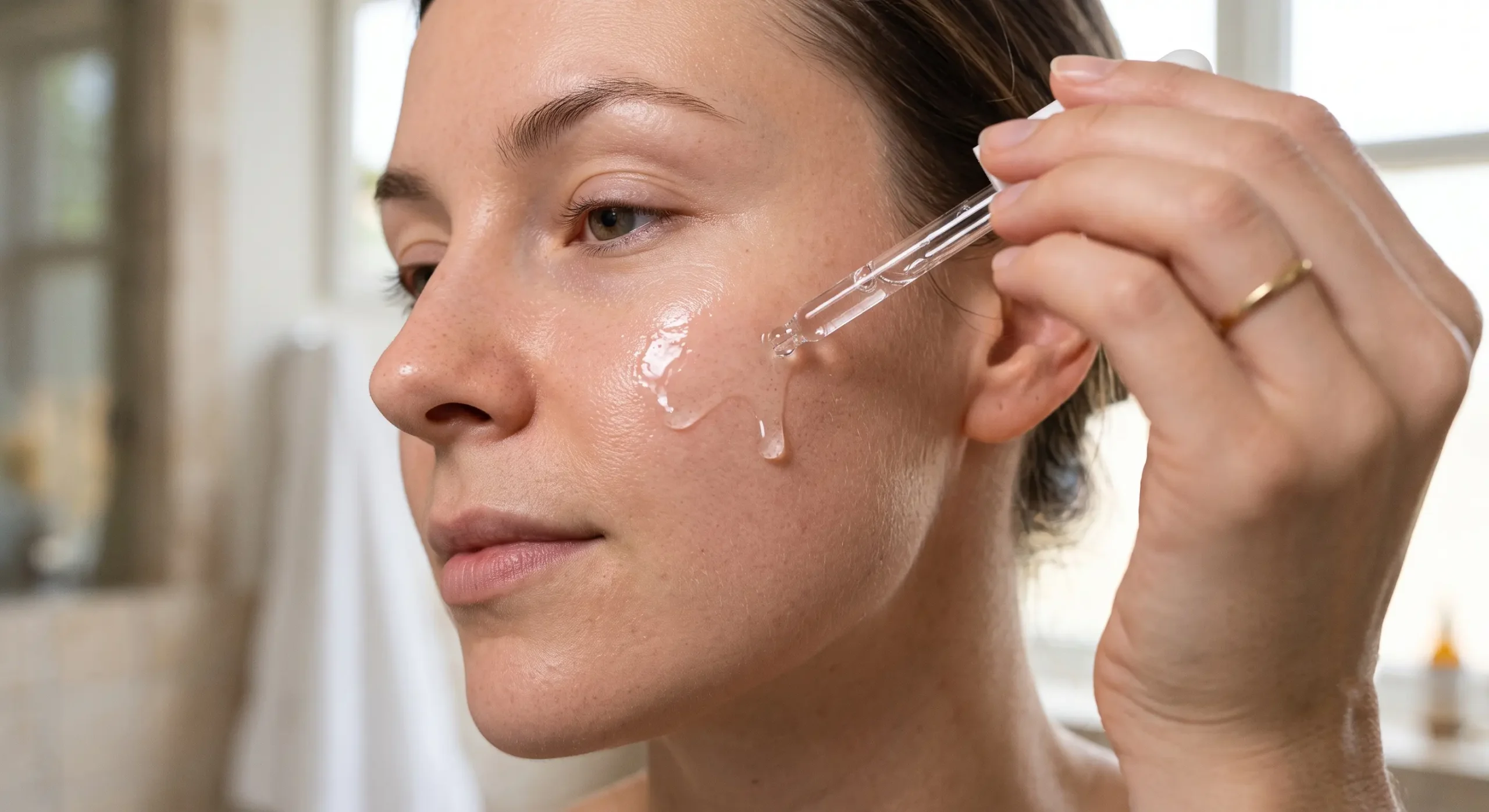
Hyaluronic acid (often abbreviated as HA) is a naturally occurring glycosaminoglycan found throughout the body’s connective tissue, predominantly in the skin, eyes, and joints. In the realm of skincare, it functions as a humectant. A humectant is a substance that acts like a microscopic sponge, pulling water from the environment or from the deeper layers of your skin into the epidermis (the top layer of the skin).
What makes hyaluronic acid truly remarkable is its capacity to hold up to 1,000 times its weight in water. According to the Cleveland Clinic, as we age, our natural reserves of hyaluronic acid decline significantly, leading to a loss of volume, hydration, and the formation of fine lines.
When applied topically—usually in the form of a hyaluronic acid serum or a hydrating moisturizer—HA replenishes this lost moisture. It does not exfoliate or change the structure of your cells; it simply floods them with hydration, resulting in a plump, dewy, and instantly refreshed appearance.
What Is Retinol?
Retinol is a derivative of Vitamin A and belongs to a broader class of compounds known as retinoids. Widely considered the gold standard in anti-aging skincare and dermatology, retinol works on a cellular level to change the way your skin behaves.
Unlike hyaluronic acid, which sits near the surface to provide moisture, retinol penetrates the stratum corneum (the outer skin layer) to communicate with your cells. As noted by the American Academy of Dermatology (AAD), retinoids prompt surface skin cells to turn over and die rapidly, making way for new cell growth underneath. Furthermore, they stimulate the production of collagen and elastin—the structural proteins responsible for keeping skin firm and youthful.
Because it encourages rapid cellular turnover, retinol is highly effective at minimizing the appearance of fine lines, wrinkles, hyperpigmentation, and acne. However, this potent cellular action means retinol for beginners can sometimes cause an adjustment period known as “retinization,” characterized by temporary peeling, redness, and dryness.
Key Differences Between Hyaluronic Acid and Retinol
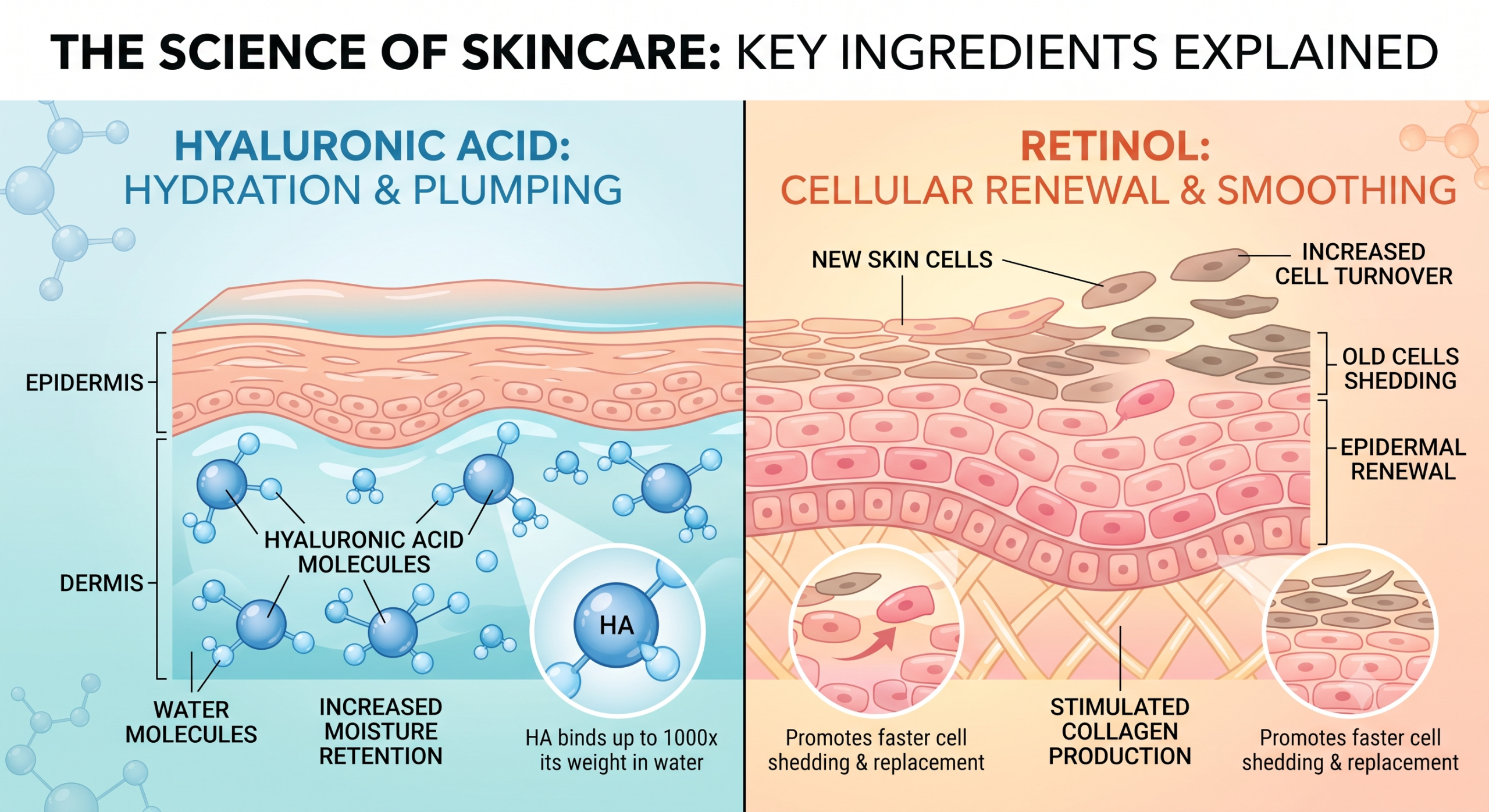
To truly understand Hyaluronic Acid vs Retinol — Which One Does Your Skin Need?, you must look at their fundamental mechanisms of action:
- Function: Hyaluronic acid is a hydrator; it adds water to the skin. Retinol is a skin-communicating cell regenerator; it speeds up cell turnover and boosts collagen.
- Immediate vs. Long-Term Results: A hyaluronic acid serum provides instant gratification. Your skin looks plumper and more hydrated within minutes. A retinol serum, on the other hand, is a long game. It typically takes 8 to 12 weeks of consistent use to see visible improvements in wrinkles, texture, or acne.
- Irritation Potential: Hyaluronic acid is universally tolerated, incredibly gentle, and safe for multiple daily uses on all skin types. Retinol is potent and requires careful, gradual introduction into a skincare routine to avoid barrier damage and irritation.
- Sun Sensitivity: Retinol makes your skin more photosensitive, meaning you are more susceptible to sunburns, which is why it is strictly recommended for nighttime use. Hyaluronic acid has no effect on your skin’s UV sensitivity and can be used morning and night.
Benefits of Hyaluronic Acid
Incorporating a hydrating skincare ingredient like hyaluronic acid into your regimen offers a multitude of benefits, particularly for maintaining a healthy skin barrier:
- Deep Hydration: It instantly relieves tight, dry, and dehydrated skin by drawing moisture into the epidermis.
- Plumps Fine Lines: By filling the skin cells with water, HA temporarily smooths out superficial fine lines and wrinkles, acting as a cosmetic “filler” effect.
- Strengthens the Lipid Barrier: When the skin is adequately hydrated, its natural protective barrier is fortified against environmental aggressors like pollution and harsh weather.
- Soothes Irritation: Hyaluronic acid is non-comedogenic (won’t clog pores) and highly soothing, making it a perfect companion for calming inflamed or sensitive skin.
- Improves Skincare Absorption: Damp, hydrated skin absorbs subsequent skincare products more effectively than dry skin.
Benefits of Retinol
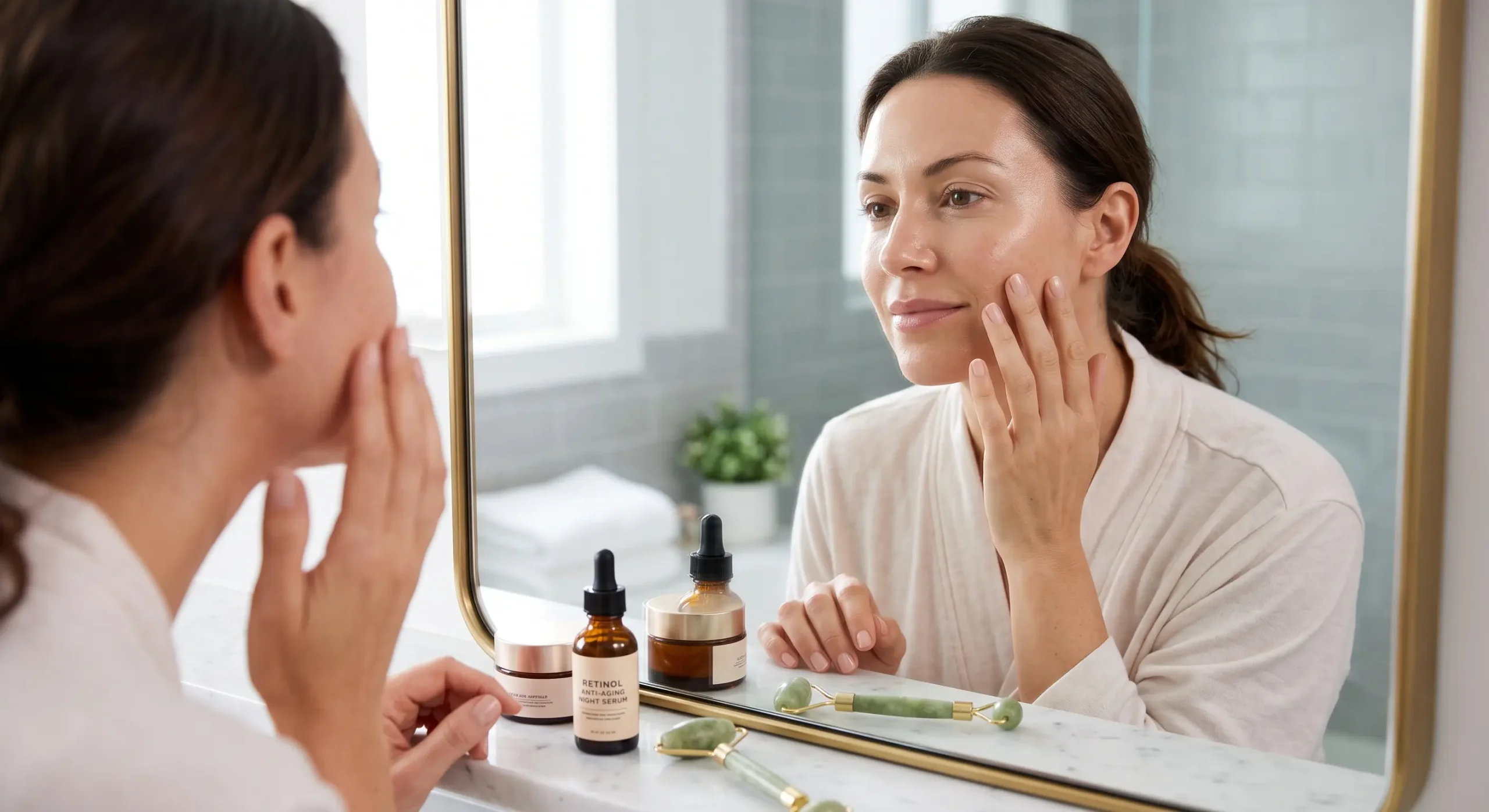
Retinol is often recommended by dermatologists because its benefits are backed by decades of clinical research. According to resources from the National Institutes of Health (NIH), topical retinoids provide the following structural benefits:
- Anti-Aging Powerhouse: It clinically reduces the depth and appearance of wrinkles by stimulating collagen production.
- Acne Management: By speeding up cell turnover, retinol prevents dead skin cells from clogging pores, making it a highly effective treatment for acne and blackheads.
- Evens Skin Tone: Retinol helps fade dark spots, sun damage, and post-inflammatory hyperpigmentation by shedding pigmented cells faster.
- Improves Texture: Regular use results in a smoother, softer skin texture, reducing roughness and bumpy skin.
- Firms the Skin: By boosting elastin production, retinol helps counteract the natural sagging that occurs as we age.
Hyaluronic Acid vs Retinol Comparison Table
| Feature | Hyaluronic Acid | Retinol |
|---|---|---|
| Primary Function | Hydration & Moisture retention | Cellular renewal & Collagen production |
| Best For | Dryness, dehydration, dullness | Wrinkles, fine lines, acne, texture |
| Speed of Results | Immediate (within minutes) | Long-term (8–12 weeks) |
| Time of Use | Morning and/or Night | Nighttime only |
| Skin Tolerance | Excellent for all skin types | Can cause initial dryness/peeling |
| Pregnancy Safe? | Yes | No (Avoid during pregnancy/nursing) |
Which Ingredient Is Best for Different Skin Types?
Choosing between a hyaluronic acid serum and a retinol serum depends heavily on your skin type and your primary skincare goals.
For Dry and Dehydrated Skin
The Winner: Hyaluronic Acid If your skin constantly feels tight, looks dull, or exhibits dry patches, hydration is your absolute priority. Hyaluronic acid will flood your skin with the moisture it desperately needs. You can eventually introduce a low-strength retinol, but your barrier must be hydrated and healthy first.
For Oily and Acne-Prone Skin
The Winner: Retinol While oily skin still needs hydration (and HA is great because it is lightweight and oil-free), retinol is the game-changer here. It unclogs pores, regulates oil production over time, and helps clear breakouts while fading acne scars.
For Aging and Mature Skin
The Winner: Both Mature skin requires a multi-pronged approach. Retinol is essential for rebuilding lost collagen and treating deep wrinkles. However, aging skin also produces less natural moisture and sebum, making hyaluronic acid equally critical to maintain a plump, youthful bounce.
For Sensitive Skin
The Winner: Hyaluronic Acid (with caution on Retinol) Sensitive skin loves hyaluronic acid’s soothing properties. If you have rosacea, eczema, or highly reactive skin, retinol can be challenging. If you wish to use retinol for its anti-aging benefits, you must start with the lowest possible concentration, use it only once a week, and heavily buffer it with moisturizers.
Can You Use Hyaluronic Acid and Retinol Together?
Yes! In fact, dermatologists highly recommend combining these two ingredients. Because retinol can be inherently drying and irritating, particularly during the initial weeks of use, pairing it with hyaluronic acid is the perfect strategy to mitigate these side effects.
Hyaluronic acid acts as a safety net. It provides the deep hydration needed to counteract the flakiness and redness caused by the accelerated cell turnover from retinol. When used correctly, they form one of the most effective, balanced anti-aging skincare routines available.
How to Build a Skincare Routine Using Both Ingredients
If you are ready to use both ingredients, proper layering is crucial to maximize efficacy and minimize irritation. Here is a dermatologist-informed approach to building your routine:
The Morning Routine (Focus on Hydration & Protection)
- Cleanser: Wash with a gentle, hydrating cleanser.
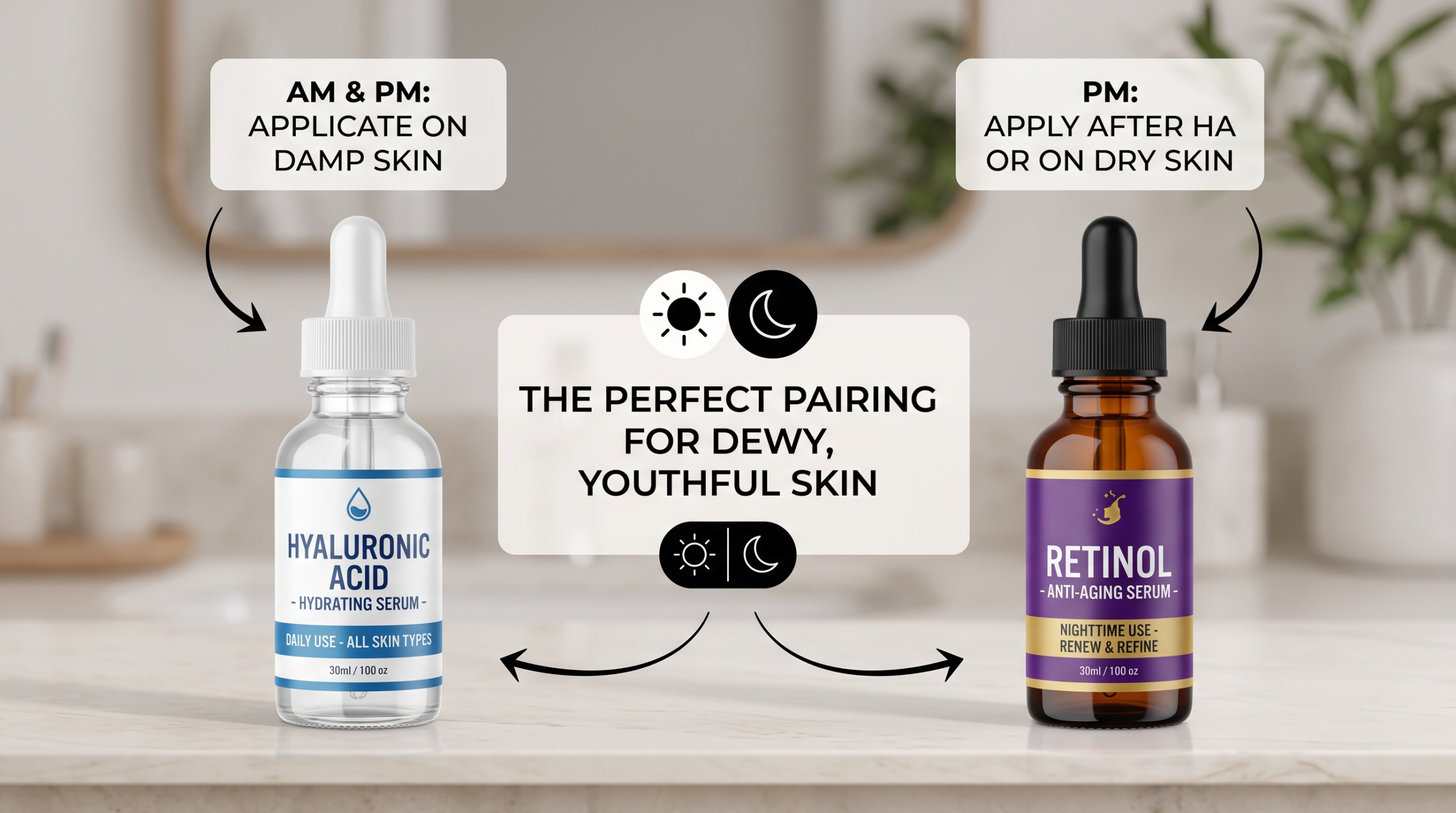
- Hyaluronic Acid: Apply your hyaluronic acid serum to damp skin. (HA needs water to bind to; applying it to dry skin can actually draw moisture out of the deeper layers of your skin).
- Moisturizer: Apply a rich cream to seal in the hydration.
- Sunscreen: Apply a broad-spectrum SPF 30 or higher. This is non-negotiable, especially when using retinol at night.
The Evening Routine (Focus on Repair & Renewal)
- Double Cleanse: Remove makeup, SPF, and impurities.
- Dry Your Skin: Wait until your skin is completely dry. Applying retinol to damp skin increases its penetration rate, which can lead to severe irritation.
- Apply Retinol: Apply a pea-sized amount of your retinol serum to your face, avoiding the immediate eye area and the corners of your mouth.
- Apply Hyaluronic Acid (Optional Layering): You can apply HA over your retinol once it has absorbed, or use a moisturizer formulated with hyaluronic acid.
- Moisturize: Finish with a rich, nourishing night cream to lock everything in.
(Looking to build your perfect routine? Browse the extensive collection of authentic Skincare Products at Modern Beauty BD to find the right serums for your skin).
Common Mistakes to Avoid
Even the best skincare ingredients can backfire if used incorrectly. Watch out for these common pitfalls:
- Using Retinol on Damp Skin: As mentioned, water acts as a vehicle, dragging retinol deeper and faster into the skin, which significantly increases the risk of a damaged skin barrier.
- Applying Hyaluronic Acid on Bone-Dry Skin: In an arid environment, if you apply HA to dry skin without following up with a moisturizer, it may pull water out of your skin, leaving it drier than before. Always apply to damp skin and seal it with a cream.
- Skipping Sunscreen: Retinol reveals fresh, new skin cells that are highly susceptible to UV damage. Failing to wear daily sunscreen negates the anti-aging benefits of retinol and puts you at risk for sunburn and hyperpigmentation.
- Using Too Much Retinol: A pea-sized amount is enough for your entire face. Applying more will not give you faster results; it will only cause chemical burns and peeling.
Expert Tips for Safe Use
To ensure a smooth journey into using active skincare ingredients, keep these expert-backed tips in mind:
- The Sandwich Method: If you are a beginner with sensitive skin, try the “sandwich method” for retinol. Apply a thin layer of moisturizer, followed by your retinol, and top it off with another layer of moisturizer. This slows down absorption and buffers irritation.
- Start Slow: When introducing retinol, use it only one or two nights a week. Gradually increase the frequency as your skin builds tolerance over several weeks.
- Patch Test: Always perform a patch test on your jawline or inner arm when trying a new serum to check for allergic reactions before applying it to your entire face.
- Listen to Your Skin: If your skin feels tight, burns when you apply gentle moisturizer, or looks excessively red, stop the retinol immediately. Focus purely on hyaluronic acid and barrier repair creams until the skin heals.
Frequently Asked Questions
1. Can I mix hyaluronic acid and retinol in the same step? It is better to layer them sequentially rather than mixing them in the palm of your hand. Mixing can dilute the efficacy of the retinol and disrupt the formulation. However, you can buy products that are professionally formulated with both ingredients.
2. Which goes first: hyaluronic acid or retinol? The general rule of skincare is to apply products from thinnest to thickest consistency. If both are serums, apply the active treatment (retinol) to dry skin first, let it absorb, and follow with HA. If your HA is a thin liquid, you can apply it first on damp skin, let it dry completely, and then apply retinol.
3. At what age should I start using retinol? Dermatologists often recommend starting a retinol routine in your mid-to-late 20s. This is when the body’s natural collagen production begins to slowly decline.
4. Is hyaluronic acid actually an acid? Despite the name, hyaluronic acid is not an exfoliating acid like AHAs (Glycolic Acid) or BHAs (Salicylic Acid). It does not strip the skin; it is a gentle, hydrating sugar molecule.
5. Can I use Vitamin C with these ingredients? Yes, but timing matters. Use your Vitamin C serum and hyaluronic acid in the morning for environmental protection and hydration. Reserve your retinol for your nighttime routine.
6. How long does it take to see results from retinol? While you might notice a slightly smoother texture in a few weeks, true structural changes—like the reduction of fine lines and fading of dark spots—take around 8 to 12 weeks of consistent use.
7. Can I use these ingredients around my eyes? Hyaluronic acid is perfectly safe and beneficial around the eyes. Retinol should be used with extreme caution around the delicate eye area; it is best to use a specifically formulated retinol eye cream rather than your standard face serum.
8. Are these ingredients safe during pregnancy? Hyaluronic acid is completely safe during pregnancy and nursing. However, retinol and all other Vitamin A derivatives must be strictly avoided during pregnancy.
Conclusion
When weighing Hyaluronic Acid vs Retinol — Which One Does Your Skin Need?, the ultimate answer is that they are not competitors; they are complementary allies in achieving optimal skin health.
Hyaluronic acid is the ultimate hydrator, perfect for daily use to maintain a plump, resilient, and healthy skin barrier. Retinol is the heavy-lifting treatment, repairing cellular damage, fighting acne, and turning back the clock on aging. For those looking for a complete, well-rounded skincare routine, finding a way to incorporate both safely will yield the best, most radiant results.
Remember to introduce active ingredients slowly, always listen to your skin’s feedback, and never skip your daily sunscreen.
Ready to Upgrade Your Skincare Routine?
Finding the right formulations is the first step to glowing skin. Explore More Beauty Tips to further educate yourself on ingredient science, or visit Modern Beauty to shop a curated selection of high-quality hyaluronic acid and retinol serums suited for every skin type and concern in Bangladesh.


